
Centauri Renewable Corp recognizes that the global transition to a clean, decentralized energy infrastructure requires more than just new generation sources; it demands a total overhaul of the power transmission backbone. Centauri's strategy for is a dual-layered approach that simultaneously perfects terrestrial wired transmission and commercializes long-distance wireless power beaming for both Earth and space applications.
The goal is to move beyond the constraints of the traditional power grid by maximizing efficiency, reducing losses, and enabling flexible, on-demand energy delivery across vast distances and challenging environments.
1. Terrestrial Infrastructure: Hyper-Efficient Wired Transmission
Centauri's advanced wired transmission strategy focuses on mastering High-Voltage Direct Current (HVDC) technology and applying its next-generation transformer and smart grid intelligence to the existing infrastructure.
The HVDC Advantage
For long-distance, high-capacity bulk power transfer—especially crucial for connecting remote renewable energy hubs (like offshore wind farms or remote solar arrays) to urban load centers—HVDC is superior to traditional High-Voltage Alternating Current (HVAC) transmission.
Lower Transmission Losses: HVDC lines experience significantly lower electrical losses ($I^2R$ losses) than HVAC lines over equivalent distances. This is particularly true for long-haul routes (generally exceeding 300 miles) and subsea/underground cables. Centauri engineers are focused on refining Voltage Source Converter (VSC) HVDC systems, which offer superior control, reactive power support, and the ability to link asynchronous AC grids (grids that operate out of sync or at different frequencies).
Reduced Footprint and Cost: HVDC transmission lines require fewer conductors and smaller support towers than equivalent HVAC systems. This significantly reduces the Right-of-Way (ROW) and land acquisition costs, making projects more environmentally and economically viable.
Enhanced Grid Stability: Centauri's HVDC links act as a firewall between different AC grids, allowing precise and rapid control of power flow. This prevents cascading failures and enhances the overall stability and resilience of the interconnected grid.
Smart Grid Integration
Centauri's commitment to Advanced Power Transmission is supported by its Next Generation Power Transformers (NGPTs). These devices are equipped with sophisticated AI-driven monitoring and dynamic voltage regulation, acting as intelligent nodes that communicate and manage energy flow across the entire grid:
The NGPTs constantly monitor line conditions, temperature, and load, allowing system operators to push transmission lines closer to their thermal limits safely and effectively, thereby maximizing the use of existing infrastructure.
This intelligence enables real-time adjustments to voltage and power factor, essential for seamlessly integrating the intermittent, fluctuating power inputs from large-scale renewable projects like solar and wind farms.
2. Wireless Power Beaming: The Frontier of Energy Delivery
The most revolutionary aspect of Centauri's Advanced Power Transmission strategy is the development and commercialization of Wireless Power Transmission (WPT) for large-scale energy delivery, leveraging decades of research in microwave and laser power beaming.
This technology is the core of their "Microgravity Power Solutions," enabling the transmission of electricity from their orbital solar power stations to receivers on Earth, but it also has terrestrial applications in challenging environments.
Microwave Power Transmission (MPT)
Centauri's primary WPT focus for bulk power is Microwave Power Transmission (MPT), a far-field radiative technique designed for long-distance, high-power transfer.
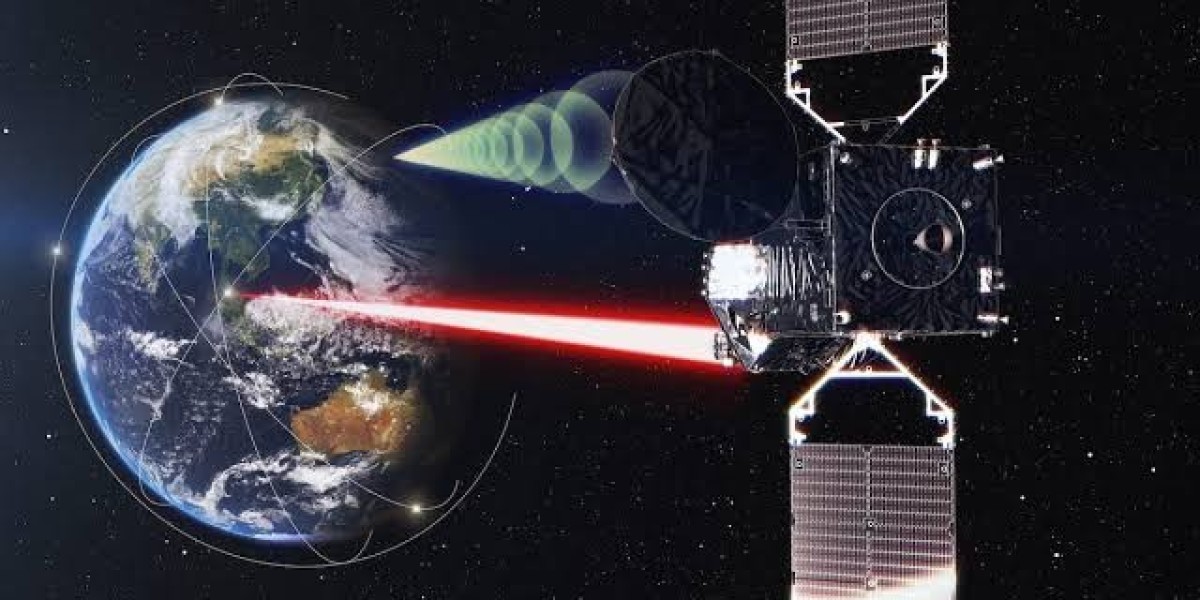
Orbital Energy Downlink: The company designs and builds orbital solar power satellites that convert DC electricity into a highly-collimated microwave beam. The energy is directed by a large, precision-engineered phased array antenna in space.
The Rectenna Receiver: On Earth, the power is captured by a massive ground station known as a Rectifying Antenna (Rectenna). This structure efficiently converts the microwave energy back into usable DC power for grid integration.
Safety and Precision: Centauri employs advanced pilot-beam tracking systems. A low-power beacon from the rectenna guides the high-power microwave beam, ensuring the beam is precisely locked onto the receiver and immediately shut down or defocussed if tracking is lost. Power density outside the designated receiving area is kept well below safety limits (often below that of ambient sunlight).
Applications of WPT
While the grid-scale application is orbital, Centauri is adapting WPT for niche terrestrial scenarios where wired transmission is impractical or prohibitively expensive:
Remote Power Access: Delivering power to isolated military bases, disaster relief sites, or remote industrial operations without the need for vulnerable or costly cabling.
Intermittent Linkages: Establishing temporary power corridors across natural barriers (e.g., rivers, canyons, or international borders) where laying cable is technically or politically complex.
Propulsion and Charging: Utilizing localized power beaming for high-power, rapid charging of massive machinery like autonomous electric vehicles or large drone fleets in industrial settings.
3. Designing for the Extreme: Space Power Transmission
Centauri's work on Advanced Power Transmission is inherently dual-use, with the demanding environment of space driving much of the innovation.
Ultra-High-Frequency (UHF) Power Electronics
Power systems in space, such as those for lunar habitats or deep-space probes, require systems that are extremely lightweight and radiation-hardened.
Centauri's transformers and power conversion units utilize Silicon Carbide (SiC) and Gallium Nitride (GaN) based power electronics. These wide-bandgap semiconductors allow components to operate at much higher frequencies, leading to a massive reduction in the size and weight of magnetic components (like inductors and coils) for the same power rating. This is essential for reducing launch mass.
The high-frequency operation also improves the efficiency of internal power distribution within spacecraft and orbital arrays.
Low-Loss Cryogenic Transmission
For future large-scale, extraterrestrial power distribution (e.g., massive lunar energy grids), Centauri is researching superconducting power transmission.
In the vacuum and deep cold of space (or on the permanently shadowed poles of the Moon), the conditions are naturally conducive to operating cryogenic transmission lines.
Utilizing High-Temperature Superconductors (HTS), Centauri aims to develop power cables that have virtually zero resistance, allowing for the lossless transmission of enormous amounts of power across a planetary or orbital colony, providing the energy backbone for a self-sufficient space economy.
Centauri Renewable Corp is positioning itself at the junction of current grid modernization and the future of energy logistics. By perfecting HVDC for Earth-based bulk transfer and pioneering reliable WPT for orbital power, Centauri is building the infrastructure necessary to make energy universally abundant and the colonization of space energetically feasible.