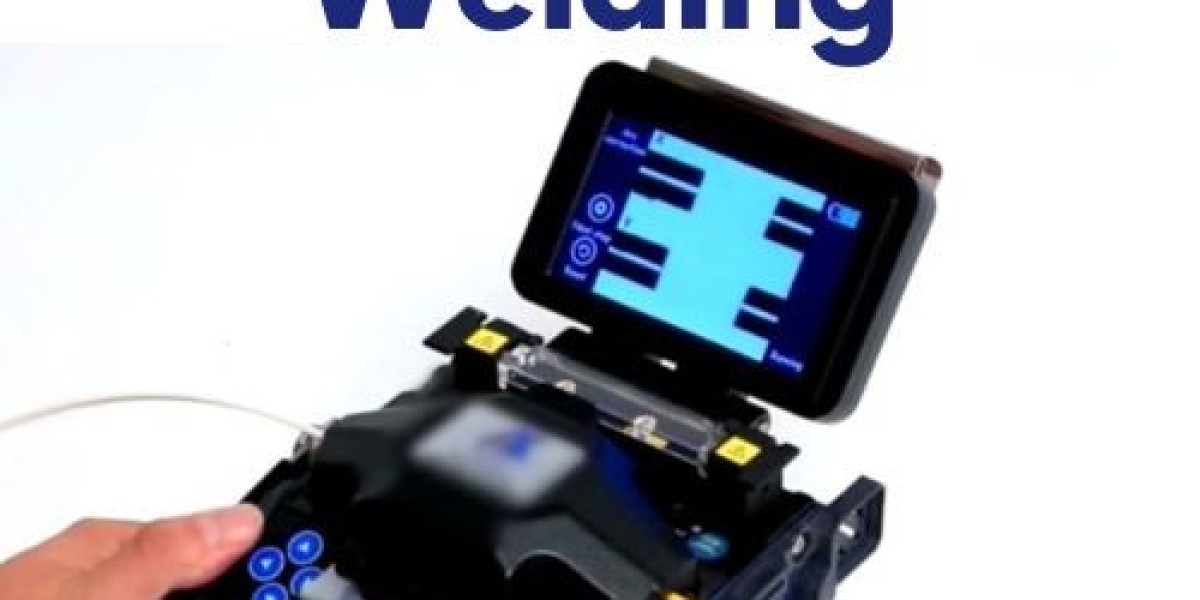

Optic fiber welding is a pivotal process in modern telecommunications, networking, and high-tech industries. It involves the precise joining of two optical fibers to form a continuous pathway for light signals. This process ensures minimal signal loss and preserves the integrity of data transmission across long distances. Optical fibers, composed of glass or plastic, require meticulous alignment to maintain their core-to-core connection during welding. The exactness in this alignment determines the efficiency of light propagation and the quality of the resulting network.
The process of optic fiber welding starts with the preparation of the fiber ends. Each fiber is carefully stripped of its protective coating, cleaned to remove any contaminants, and cleaved to produce a flat, smooth end-face. The cleaving stage is critical because even microscopic imperfections can lead to significant signal attenuation or reflection. Advanced cleaving tools are designed to produce end faces with near-perfect perpendicularity to the fiber axis, reducing the risk of optical misalignment.
After preparation, the fibers undergo fusion welding using specialized devices known as fusion splicers. These devices employ controlled electrical arcs to melt the glass ends, causing them to fuse together seamlessly. During the welding process, the fibers are aligned with sub-micron precision using automated cameras and high-resolution sensors. The splicer monitors the alignment continuously and adjusts the fiber positions to ensure the best possible connection. Some modern splicers include advanced algorithms that compensate for angular misalignments, core offsets, and variations in fiber diameter.
Optic fiber welding is essential in building resilient and high-capacity communication networks. Data centers, metropolitan area networks, and long-haul fiber optic cables all rely on precise welding to maintain signal integrity. The process is not limited to telecommunications; it also finds applications in medical devices, sensor technology, aerospace systems, and defense communications. Each of these fields demands highly reliable and durable fiber connections capable of withstanding environmental stresses such as temperature fluctuations, mechanical vibrations, and humidity.
The performance of optic fiber welding can be measured using parameters such as splice loss, return loss, and mechanical strength. Splice loss refers to the reduction in signal power at the junction of two fibers, while return loss indicates the amount of signal reflected back toward the source. High-quality welding achieves minimal splice loss and high return loss, ensuring optimal data transmission. Mechanical strength ensures the fibers remain securely joined, even under tension or bending conditions. Technicians often use optical time-domain reflectometers (OTDRs) and specialized microscopes to verify the integrity of the welded fibers.
Emerging technologies continue to expand the capabilities of optic fiber welding. Ultra-low-loss fibers, large-core multimode fibers, and specialty fibers for sensing applications require novel welding techniques and precision tools. Automated splicing systems with AI-assisted alignment can now handle complex fiber geometries and reduce human error. In addition, innovations in monitoring and diagnostic software allow technicians to detect potential weaknesses in real time, enhancing reliability and efficiency.
The training and expertise of technicians play a crucial role in the quality of optic fiber welding. Skilled operators understand how to handle fibers delicately, interpret splicer feedback, and troubleshoot potential issues during the welding process. Training programs emphasize hands-on experience with a variety of fiber types, environmental conditions, and splicing equipment. They also cover the principles of optical physics, such as refractive index matching and light propagation, which underpin the practical aspects of fiber welding.
In industrial environments, optic fiber welding is integrated into both field installations and factory settings. Field splicing is often required for network repairs, extensions, or maintenance of existing infrastructure. In contrast, factory splicing supports the pre-assembly of fiber optic components, modules, and cables with high precision. Both scenarios demand consistent welding quality to maintain network performance and meet strict industry standards. Standards established by organizations such as the International Electrotechnical Commission (IEC) and Telecommunications Industry Association (TIA) guide the procedures and quality assessments for optic fiber welding.
Optic fiber welding is also influenced by the properties of the fibers themselves. Single-mode fibers, which have a smaller core diameter, require extremely accurate alignment to prevent signal loss, whereas multimode fibers, with larger cores, provide slightly more tolerance but still demand precise welding. Specialty fibers, such as polarization-maintaining fibers or photonic crystal fibers, introduce additional challenges that necessitate advanced splicing techniques.
The long-term reliability of welded fibers depends on proper environmental protection. After welding, fibers are typically reinforced with heat-shrink tubing or protective sleeves to prevent damage from external forces. In addition, proper handling, storage, and routing of fiber cables minimize stress points that could compromise the welded joints over time. Maintenance procedures may involve periodic inspection, testing, and cleaning to ensure optimal performance throughout the lifespan of the network.
Overall, optic fiber welding is a sophisticated process that blends precision engineering, material science, and advanced technology. Its significance spans telecommunications, medical devices, defense systems, and industrial applications, providing the backbone for high-speed, high-fidelity data transmission. The ongoing advancements in splicing tools, alignment technologies, and fiber designs continue to enhance the efficiency, reliability, and scalability of optic fiber networks worldwide.