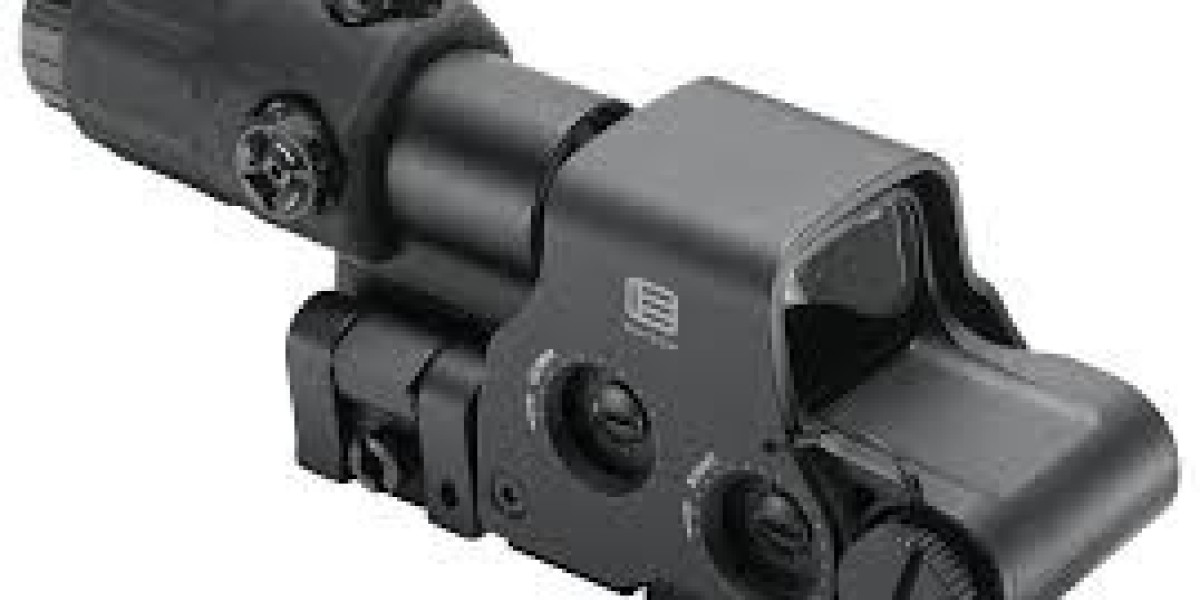

In the world of precision shooting, speed and accuracy can make all the difference. Traditional scopes and reflex sights often limit the shooter’s field of view or require perfect eye alignment. That’s where the holographic sight changes the game. Designed using laser and holographic projection principles, this technology provides clear reticles and faster target acquisition without parallax issues.
From military operations to hunting and sports shooting, holographic sights have become an essential upgrade. In this article, we’ll explore how holographic sight technology works, its benefits, applications, and why it’s becoming the new standard for modern optics.
What Is a Holographic Sight?
A holographic sight is an advanced optical aiming system that projects a holographic reticle into the shooter’s field of view using laser light. Unlike red dot sights that reflect an LED onto a lens, holographic sights use laser-generated holograms displayed on a transparent glass window.
This allows the reticle to appear as if it’s floating over the target, enabling precise and quick aiming even in challenging conditions. Since the reticle image is part of a holographic layer, it remains visible even if the lens is partially damaged or dirty — a major advantage for field reliability.
How a Holographic Sight Works
The holographic sight operates on the principle of laser interference and light diffraction. Here’s a simplified breakdown:
A laser diode emits a beam toward a holographic grating.
The hologram contains data of a reticle pattern recorded during manufacturing.
When light passes through, the holographic pattern reconstructs the reticle image.
The user sees the reticle aligned with the target, even if their head or eye position shifts slightly.
This mechanism eliminates parallax errors and allows the shooter to focus on both the reticle and the target simultaneously, ensuring higher accuracy and speed.
Key Benefits of Holographic Sights
Holographic sights offer several performance advantages that set them apart from traditional optics:
Faster Target Acquisition: The floating reticle helps align the firearm instantly, ideal for quick reaction scenarios.
Wide Field of View: The optical window provides a large, unobstructed sight picture.
High Precision: The reticle size remains consistent regardless of magnification.
Durability: Works reliably under harsh weather, vibration, and recoil conditions.
Parallax-Free Operation: The reticle remains on target even when viewed from different angles.
These features make holographic sights a top choice among professionals who demand performance and reliability in every shot.
Holographic Sight vs. Red Dot Sight
Although both sights appear similar, they operate differently and cater to different needs.
| Feature | Holographic Sight | Red Dot Sight |
|---|---|---|
| Technology | Laser-based hologram | LED reflection |
| Reticle Clarity | Sharp and multi-dimensional | Simple dot reticle |
| Parallax | Virtually zero | Slight parallax at long range |
| Speed | Faster for moving targets | Slightly slower |
| Cost | Higher | More affordable |
| Power Usage | Moderate | Lower |
For advanced shooters who value precision and adaptability, the holographic sight remains unmatched in accuracy and speed.
Applications Across Industries
Holographic sights are no longer limited to military or law enforcement. Their precision and versatility make them ideal for:
Tactical and Defense Operations – Ensures quick engagement and situational awareness in close quarters.
Hunting – Offers better performance for moving targets in varied lighting conditions.
Sports Shooting – Improves reaction time and consistency in competitions.
Training and Simulation Systems – Used in virtual and live-fire setups for realism and safety.
As the technology becomes more accessible, manufacturers are integrating holographic systems into a wider range of firearms and optical platforms.
Design and Build Quality
Modern holographic sights are built with multi-layer coated glass lenses, shock-resistant aluminum housings, and sealed waterproof designs to endure demanding environments. High-quality models also include anti-glare coatings and adjustable reticle brightness for daylight and night operations.
Advanced models use motion sensors to automatically power on or off, conserving energy without compromising readiness. With the inclusion of compact form factors and lightweight materials, these sights maintain balance without adding unnecessary weight to the firearm.
Why Choose a Holographic Sight?
If you require both precision and speed, a holographic sight offers the ideal balance. Unlike magnified scopes, it enables both-eyes-open shooting — allowing shooters to maintain situational awareness while focusing on their target.
Moreover, its laser-generated reticle remains crisp regardless of environmental lighting or distance, ensuring dependable performance in every scenario. Whether in tactical combat, field hunting, or range practice, holographic sights consistently deliver superior accuracy and comfort.
The Future of Holographic Sight Technology
The future of holographic optics lies in digital integration and AI-assisted targeting. Emerging designs will merge augmented reality (AR) overlays with holographic reticles to display ballistic data, range estimations, and environmental adjustments in real time.
Manufacturers are also experimenting with microdisplay fusion, combining holographic projection with OLED panels for even sharper visuals and reduced energy consumption. These innovations aim to make holographic sights more compact, durable, and intelligent.
Conclusion
The holographic sight has revolutionized how shooters aim, react, and perform. By merging laser optics with advanced projection systems, it provides unparalleled accuracy, faster targeting, and reliable operation in all conditions.
As firearm optics continue to evolve, holographic sights stand at the forefront of precision engineering — empowering professionals, hunters, and sports shooters with cutting-edge optical performance.