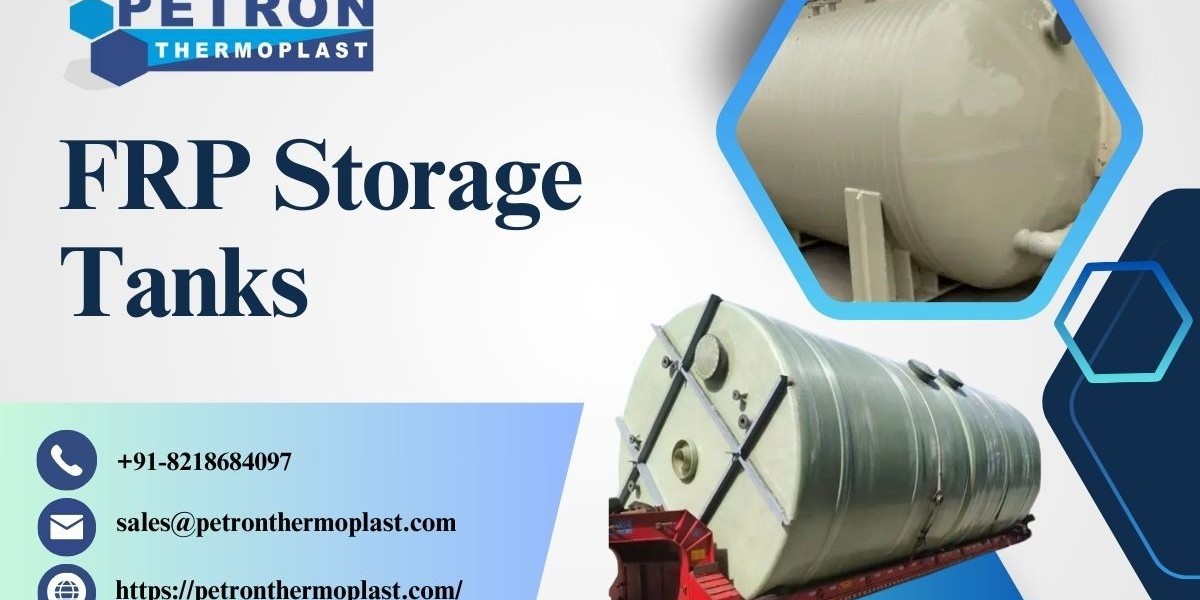

In the world of industrial manufacturing, the safe handling, storage, and processing of liquids, chemicals, and raw materials are essential for maintaining operational efficiency and workplace safety. Whether a facility deals with corrosive chemicals, wastewater, acids, solvents, or high-purity liquids, the storage system must be durable, corrosion-resistant, and long-lasting. This is where FRP (Fiber Reinforced Plastic) Storage Tanks have proven to be one of the most reliable and versatile solutions for modern industrial processes.
With industries demanding stronger and more chemical-resistant solutions, FRP storage tanks have rapidly become the preferred choice for manufacturing plants worldwide. Their combination of strength, lightweight construction, corrosion resistance, and custom design flexibility provides a major advantage over conventional metal tanks.
In this comprehensive guide, we explore why FRP storage tanks have become essential for industrial manufacturing operations, their benefits, applications, and how companies like Petron Thermoplast are leading innovation in this field.
What Are FRP Storage Tanks?
FRP (Fiber Reinforced Plastic) storage tanks are advanced industrial storage vessels manufactured by reinforcing polyester, vinyl ester, or epoxy resins with fiberglass. These tanks are engineered to handle harsh chemicals, extreme temperatures, and challenging industrial environments. Thanks to their layered composite structure, FRP tanks are both stronger and lighter than traditional metal tanks while offering unmatched corrosion resistance.
Why FRP Tanks Are Ideal for Industrial Manufacturing?
Industrial manufacturing environments often involve handling chemicals and materials that are corrosive or reactive. Materials like mild steel or stainless steel can suffer from long-term corrosion, scaling, and chemical degradation.
FRP storage tanks address these problems directly.
1. Exceptional Corrosion Resistance
FRP tanks do not react with acids, alkalis, solvents, or corrosive gases. This makes them perfect for:
- Chemical storage
- Acid pickling plants
- Wastewater treatment
- Fertilizer production
Even highly corrosive chemicals like hydrochloric acid, chlorine, and sulfuric acid can be stored safely with the right FRP laminate design.
2. Long-Term Durability
FRP tanks can last 20–25 years or more without major maintenance, offering a far longer lifespan than steel tanks.
3. High Strength-to-Weight Ratio
Despite being lightweight, FRP tanks exhibit remarkable mechanical strength. This makes transportation, lifting, and installation much easier.
4. Customizable Designs
Every industry has different storage needs. FRP tanks can be customized in:
- Size
- Shape
- Resin selection
- Wall thickness
- Internal lining
- MOC combination (like PP-FRP, PVC-FRP, PVDF-FRP)
This flexibility is a major advantage for modern manufacturing units.
5. Suitable for Extreme Industrial Environments
FRP tanks can handle:
- High operating temperatures
- Chemical fumes
- UV exposure
- High-pressure conditions
They remain structurally stable even under demanding operational loads.
6. Cost-Effective Investment
FRP storage tanks provide major cost savings due to:
- Minimal maintenance
- No need for corrosion protection
- Long service life
- Lightweight transport and installation
Their long-term return on investment (ROI) is higher compared to metal tanks.
Types of FRP Storage Tanks Used in Industrial Manufacturing
Different manufacturing processes require different types of tanks. FRP tanks can be engineered for a wide variety of applications, including:
1. FRP Chemical Storage Tanks
Designed to store corrosive acids, solvents, and chemical solutions.
2. FRP Acid Storage Tanks
Suitable for industrial acids such as:
- HCL
- Sulfuric acid
- Nitric acid
- Mixed chemical solutions
3. FRP Water Storage Tanks
Used in:
- Industrial water treatment
- Cooling systems
- RO/DM plant systems
4. PP-FRP and PVDF-FRP Tanks
Combination tanks that offer additional chemical and temperature resistance.
5. FRP Underground Tanks
Used for petroleum products and chemical waste storage.
6. FRP Process Tanks
Used for mixing, blending, and chemical processing.
7. FRP Pickling Tanks
Widely used in metal finishing, galvanizing, and plating industries.
Applications of FRP Storage Tanks in Manufacturing Operations
FRP tanks are indispensable in various industrial segments due to their chemical safety and structural reliability.
1. Chemical Processing Plants
Safest option for corrosive fluid handling and chemical reaction processes.
2. Petrochemical Industry
Used for storage of hydrocarbons, by-products, wastewater, and solvents.
3. Pharmaceutical Manufacturing
FRP tanks support hygienic, non-reactive fluid storage and mixing.
4. Food & Beverage Industry
Used for storing process water, ingredients, and cleaning chemicals.
5. Textile & Dyeing Plants
FRP tanks store chemicals used in dye processing, bleaching, and finishing.
6. Water Treatment & Desalination Plants
FRP tanks manage:
- RO feed water
- Wastewater effluents
- Chemical dosing fluids
7. Mining & Metal Processing
FRP pickling tanks are used for acid treatment and purification.
8. Fertilizer Industry
Ideal for corrosive fertilizers, slurry, and agricultural chemicals.
Features That Make FRP Tanks the Preferred Choice
1. Lightweight but Strong
Nearly 70% lighter than steel tanks but equally strong.
2. Seamless and Leak-Proof
Manufactured without welding joints, eliminating leakage risks.
3. UV-Resistant
FRP tanks perform well in outdoor, sunlight-exposed environments.
4. Hygienic and Non-Contaminating
Suitable for high-purity industries like pharma and food.
5. Easy Installation and Mobility
Can be lifted easily using minimal equipment.
How FRP Tanks Improve Industrial Efficiency?
Reduced Maintenance
FRP tanks require no repainting, no anti-corrosion treatment, and minimal cleaning.
Higher Safety in Chemical Handling
Their non-reactive nature ensures safe storage of hazardous chemicals.
Enhanced Process Reliability
Consistent material properties allow uninterrupted plant operations.
Customization for Complex Piping Networks
FRP tanks can integrate with:
- Inlets and outlets
- Nozzles
- Platforms
- Ladders
- Chambers
- Inspection ports
Petron Thermoplast – A Trusted Supplier of FRP Storage Tanks
As one of the leading names in engineering plastics and industrial storage solutions, Petron Thermoplast specializes in manufacturing high-quality FRP Storage Tanks designed for the toughest industrial applications.
Why Choose Petron Thermoplast?
✔ International Standard Manufacturing
All FRP tanks are designed as per ASTM, BS, and international chemical storage guidelines.
✔ Premium Resin and Fiber Quality
We select high-grade resins like:
- Isophthalic
- Vinyl ester
- Bisphenol
- Epoxy-based
This ensures maximum chemical resistance.
✔ Complete Customization
We design tanks based on industry needs:
- Vertical / horizontal
- Cylindrical / rectangular
- Open top / closed top
- Underground / above ground
✔ Global Supply Network
We ship FRP tanks to:
- Middle East
- Africa
- Southeast Asia
- Europe
- North America
✔ Engineered for Safety
Petron Thermoplast FRP tanks undergo:
- Hydrostatic testing
- Structural load testing
- Chemical compatibility checks
- UV and weather exposure analysis
Conclusion
Modern industrial manufacturing operations require storage systems that can handle corrosive chemicals, high temperatures, and continuous usage. FRP Storage Tanks have emerged as the ideal solution due to their durability, corrosion resistance, customization flexibility, and low maintenance requirements. Whether used in chemical processing, water treatment, pharmaceuticals, or petrochemicals, FRP tanks deliver efficiency, safety, and long-term value.
As a trusted global manufacturer, Petron Thermoplast provides high-performance FRP storage tanks engineered to meet the demanding requirements of today’s industries. With world-class manufacturing, advanced materials, and a commitment to quality, Petron Thermoplast ensures safe and reliable storage solutions for all applications.


