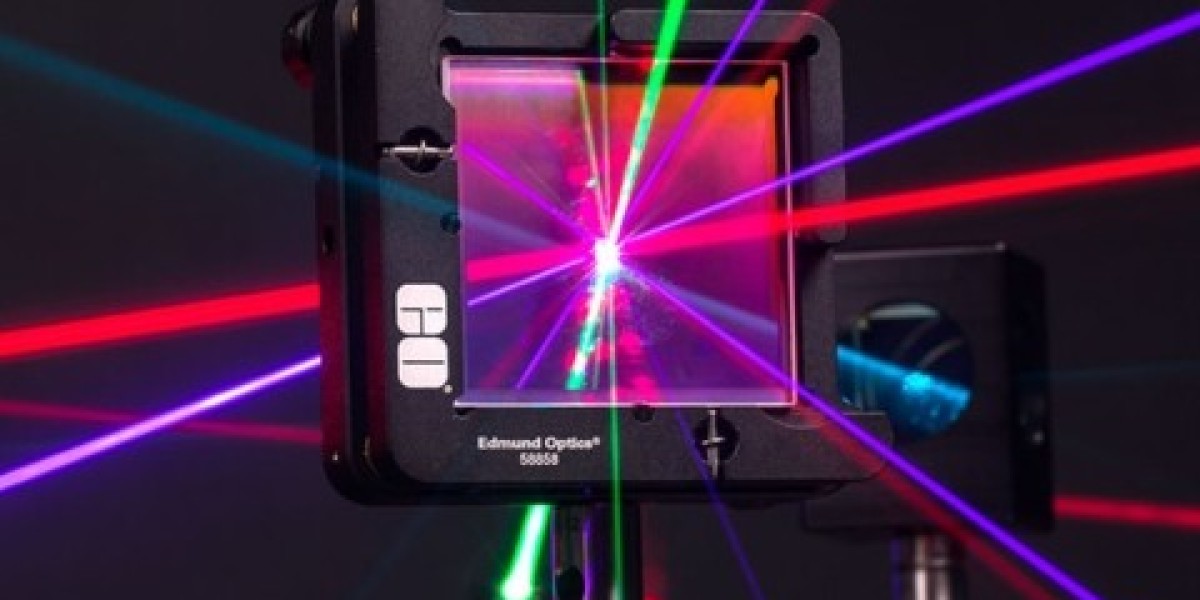

The construction of a laser mirror involves careful selection of materials and coatings to ensure optimal performance under specific laser wavelengths. Typically, high-quality substrates such as fused silica or optical glass are used due to their stability, durability, and ability to maintain precise surface flatness. The reflective coatings applied to the mirror’s surface are engineered to maximize reflectivity at targeted wavelengths, making the mirror highly efficient for particular laser systems.
In industrial settings, laser mirrors are crucial in cutting, welding, and engraving processes. They guide the laser beam along defined paths, enabling highly accurate operations on a variety of materials, including metals, plastics, and composites. In laser cutting, for instance, mirrors help focus and direct the laser to create intricate shapes and designs with unparalleled precision. Similarly, in laser welding, mirrors control the beam’s direction to join materials seamlessly without introducing defects.
Medical applications of laser mirrors are equally significant. They are integrated into surgical and diagnostic equipment, such as laser scalpels, ophthalmic lasers, and imaging devices. By precisely reflecting and steering the laser beam, these mirrors allow surgeons to perform delicate procedures with enhanced control and minimal invasiveness. In ophthalmology, for example, laser mirrors are used in eye surgeries to treat vision problems and correct refractive errors with extreme accuracy.
Scientific research also benefits extensively from laser mirrors. In laboratories, these mirrors are part of complex optical setups used in spectroscopy, holography, and interferometry. Researchers rely on laser mirrors to maintain beam quality, control optical paths, and conduct experiments requiring highly coherent light sources. The stability and performance of a laser mirror can significantly influence the outcomes of precision measurements, imaging, and quantum experiments.
The design of laser mirrors varies depending on their application. Some mirrors are flat, providing simple reflection at specified angles, while others are curved to focus or expand the laser beam. Curved mirrors, such as concave or convex types, are used in laser cavities and resonators to manipulate beam divergence and intensity. Beam steering assemblies often incorporate multiple mirrors, allowing complex paths and precise alignment within optical systems.
Maintenance and handling of laser mirrors are critical for their longevity and performance. Dust, fingerprints, or scratches on the mirror surface can degrade laser efficiency and compromise system accuracy. Therefore, careful cleaning using appropriate solvents and lint-free materials is necessary. Additionally, mirrors should be mounted securely in vibration-free holders to prevent misalignment during operation. Many laser systems include adjustable mounts that allow precise angular tuning of the mirrors for optimal performance.
High-power laser mirrors require special attention due to the intense energy they reflect. Thermal effects can lead to distortion or damage if the mirror is not designed for high-power operation. Engineers address this by using advanced coatings with high damage thresholds and incorporating heat dissipation mechanisms into the mirror assembly. This ensures that even in continuous or pulsed high-power laser applications, the mirrors maintain performance and structural integrity.
Emerging technologies continue to expand the applications of laser mirrors. In photonics and optical computing, mirrors are used to route laser signals in circuits and data processing systems. In defense and aerospace, laser mirrors are part of targeting, range-finding, and laser communication systems. They enable precise control of light over long distances and in challenging environments, showcasing the versatility of laser mirror technology.
Custom laser mirrors are increasingly in demand as industries require solutions tailored to specific wavelengths, beam diameters, and operational conditions. Manufacturers offer mirrors with specialized coatings to enhance reflection for ultraviolet, visible, or infrared laser systems. These custom mirrors are essential in laboratories, industrial setups, and medical devices where standard mirrors may not meet the required specifications.
The role of laser mirrors in innovation cannot be overstated. From enabling advanced manufacturing techniques to supporting groundbreaking research, these optical components are integral to modern technology. They are the silent workhorses of laser systems, ensuring that energy is precisely directed, controlled, and harnessed for practical and experimental applications.
Research continues to improve the durability, reflectivity, and thermal handling of laser mirrors. Novel coating materials, adaptive optics, and precision fabrication techniques are being developed to meet the growing demands of high-performance laser systems. These advances promise even greater efficiency, stability, and flexibility in future applications across multiple industries.
In addition to technical performance, the positioning and alignment of laser mirrors within optical systems are critical. Small angular deviations can lead to significant shifts in the laser path, affecting the precision of the operation. Modern laser systems often include automated alignment mechanisms, where mirrors are adjusted using motorized stages to maintain optimal reflection paths. This automation enhances both efficiency and accuracy, particularly in complex industrial and research setups.
Laser mirrors also play a role in educational and training environments. Optical laboratories in universities and technical institutes use mirrors to teach principles of laser physics, optics, and photonics. By observing how laser beams interact with mirrors, students gain practical insights into reflection, refraction, and beam shaping. This hands-on experience is fundamental in training the next generation of engineers and scientists in the field of laser technology.
Environmental considerations are increasingly influencing the production and selection of laser mirrors. Sustainable manufacturing practices, low-impact materials, and coatings that reduce environmental hazards are becoming more prominent. As industries prioritize sustainability, laser mirrors are being developed with materials and processes that align with these goals, ensuring that technological advancement is balanced with environmental responsibility.
The versatility of laser mirrors is evident in their integration with other optical components such as lenses, prisms, and beam splitters. Together, these elements form complex optical networks capable of manipulating light in sophisticated ways. In telecommunications, laser mirrors help route signals in fiber optic systems, contributing to high-speed data transmission. In imaging systems, they assist in directing light to sensors and cameras, enhancing resolution and accuracy.
Overall, laser mirrors are indispensable in any system that requires precise light control. Their ability to reflect, redirect, and shape laser beams makes them fundamental in applications ranging from industrial machining to medical treatment, scientific research, and cutting-edge technology development. Continuous improvements in materials, coatings, and mounting systems ensure that laser mirrors remain reliable, efficient, and highly adaptable to evolving technological demands.
In conclusion, the importance of laser mirror spans multiple domains, with their impact felt across industry, research, medicine, and education. Their role in guiding and controlling laser beams is critical for precision, efficiency, and innovation. As technology advances, laser mirrors will continue to be a cornerstone of optical systems, driving progress and enabling new possibilities in science and engineering.